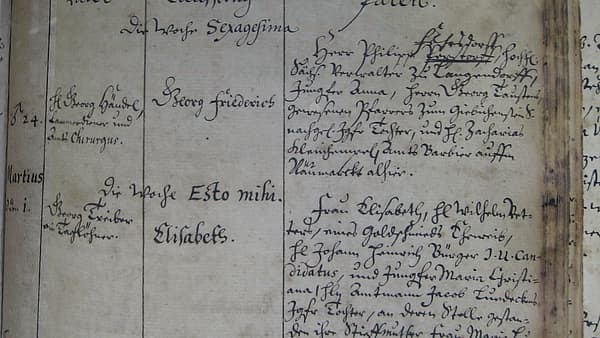
Secondary evidence of a birth is assembled from documents created for unrelated purposes that record the same particulars: religious entries, medical records, school enrolments, household registers and employment files. The case is strengthened by independence between sources and by proximity to the event, and weakened where every document descends from one late statement.
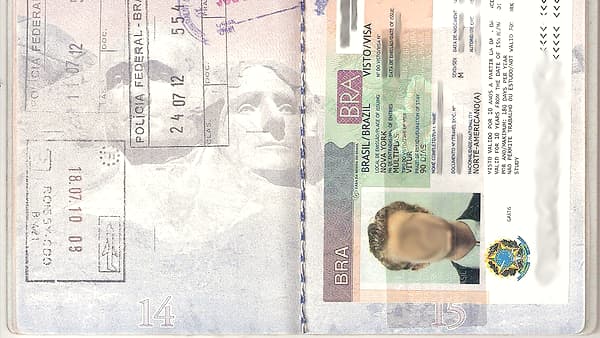
A foreign document requires authentication in a form the receiving system recognizes, a certified translation where it is not in English, and reconciliation of names, dates and registry conventions with the expectations of the body receiving it. Each is a distinct exercise, each takes time, and starting them in the wrong order wastes weeks.
A document without a date still proves its own contents, its authorship and, where the paper is authenticated, its origin. What it cannot do is fix itself in a sequence, which matters wherever the order of events decides the outcome. The date is then established circumstantially, from the file it sits in, the events it mentions, the paper it is printed on and the people who handled it.
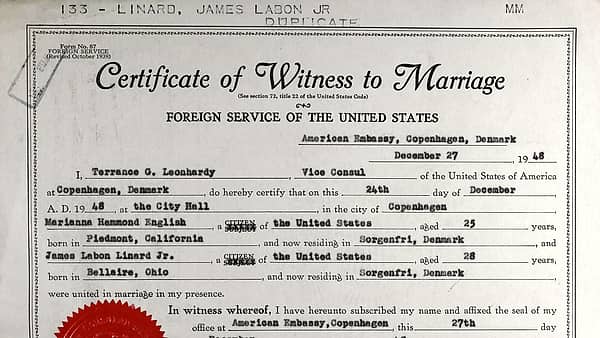
Where a marriage is questioned, the inquiry is generally into what the parties intended when they entered it rather than into how the relationship looks now. Contemporaneous documents from the period around the marriage, a consistent account from both parties and evidence of a shared life are what answer it. Inconsistency damages a genuine case more than any single adverse fact.
A party's own out-of-court statement is generally admissible against them without any exception, whether or not it was against their interest when made. Separately, a statement by a non-party that was against their own interest at the time is admissible where that person is unavailable. The first is far broader and is the one most often needed.
Adoption transfers legal parentage permanently. Guardianship confers responsibility without changing parentage and usually ends at a defined point. Legal parentage can also arise by registration, acknowledgment or presumption. Which one a document created depends on the law of the place and on what the order actually says, not on the label at the top of the page.
An adverse inference permits a decision-maker to conclude that missing evidence or unexplained silence would have been unhelpful to the party responsible. It is discretionary, it depends on the material having been within that party's control, and it operates as reinforcement rather than as a substitute for evidence the other side was required to produce.
A useful declaration identifies the writer, explains how they came to know the people involved, and describes specific things they observed with dates and places. Statements that assert conclusions, omit the basis of knowledge, or arrive in identical wording from several people are discounted heavily and can damage a file rather than support it.
A declaration of loss establishes the unavailability that secondary evidence depends on. It must identify the document precisely, state what it contained, describe how it was lost and set out the search undertaken. Statements that assert loss without specifics fail, and where the declarant is not the person who lost the document, that has to be explained.
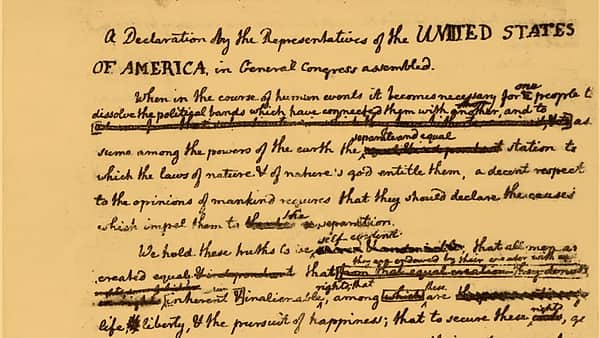
An alteration on the face of an instrument raises three questions: what the document said before, who changed it, and whether the change was agreed. Initials in the margin answer the third for the people who wrote them. An unexplained alteration in a material term shifts attention onto whoever produced the document, and in some instruments it can defeat the instrument entirely.
A reasoned opinion sets out the material relied on, the method applied and the steps between them, which allows a decision-maker to follow it and an opponent to test it. A bare conclusion asserts a result without a visible route. The second is weaker in practice because there is nothing in it for a decision-maker to agree with.
Two routes reach an agency's own file: a general freedom of information request, and a privacy or subject-access request made by the person the record concerns. The second is usually faster and produces more, because personal information is exempt from general disclosure but must be given to its subject. Precision in describing the material is what decides how long either takes.