Affidavits From People Who Knew Them
Statements from relatives, neighbors and friends fill the gaps that documents leave, and most of them are written badly. The defects are consistent, entirely avoidable, and visible to a reader within the first paragraph of the first declaration.

The rule in short
A useful declaration identifies the writer, explains how they came to know the people involved, and describes specific things they observed with dates and places. Statements that assert conclusions, omit the basis of knowledge, or arrive in identical wording from several people are discounted heavily and can damage a file rather than support it.
Documents establish the formal position and statements explain what the documents cannot reach. That is a real function, and it is undone by the way these statements are usually produced: drafted for the writer, asserting conclusions, and identical to three others in the same file.
What makes a statement useful
The basis of knowledge. How the writer came to know the people, over what period and in what capacity, which is the first thing any reader looks for and the most commonly omitted.
Specific observations. Particular occasions, described with enough detail that they could in principle be checked, rather than general descriptions of a relationship.
Dates and places. An account anchored in time and location reads as memory, while one floating free of both reads as construction.
Ordinary detail. The small things a person present would notice, which nobody drafting a template thinks to invent and which carry disproportionate weight.
What the writer did not see. A statement acknowledging the limits of the writer's knowledge is far more credible than one covering everything uniformly.
The writer's own words. Statements in a person's natural register are believable, and statements in polished legal English from somebody who does not write that way are not.
A clear identification. Full name, address and the relationship to each party, so that a reader knows exactly who is speaking.
What weakens a statement
Assertions instead of observations. A declaration stating that a relationship is genuine offers an opinion about the question the decision-maker is deciding.
No basis of knowledge. Without an account of how the writer knows, the statement is untethered and easy to set aside entirely.
Identical wording. Several declarations in the same phrases signal a template, and the whole group is discounted rather than just the one.
Excessive length. Long statements are usually padded, and the observations that mattered are buried among general material.
Claims beyond plausible knowledge. A neighbor describing private financial arrangements invites the question of how they could possibly know.
Missing formalities. Unsigned, undated or improperly attested statements are refused for reasons that have nothing to do with content.
| Feature | Strong statement | Weak statement |
|---|---|---|
| Basis of knowledge | Stated and specific | Absent |
| Content | Observed events | Conclusions |
| Wording | The writer's own | Shared with others |
| Length | One or two pages | Long and general |
| Limits | Acknowledged | Covers everything |
Who should write them
People with a real basis. Somebody who saw the relationship regularly over a period is worth more than somebody with an impressive title and little contact.
Unconnected observers. Neighbors, colleagues, landlords and community members carry more weight than family because they have no obvious stake.
Family members still help. Their statements are expected and discounted slightly, and a relative describing specific events remains useful evidence.
People who can be contacted. A writer who could be asked to confirm what they wrote is more credible than one whose details are incomplete.
A small number. Four detailed statements from people with genuine knowledge are worth more than twelve short ones, and files routinely contain the twelve.
People whose knowledge is documented. A landlord, an employer or a neighbor whose own records place them there is a stronger writer than somebody whose presence rests only on their word.
Nobody who has to be persuaded. A reluctant writer produces a thin statement, and a thin statement adds nothing while occupying space in the file.
The difference between a useful declaration and a discounted one is usually the instruction given. Asking somebody to confirm that a relationship is genuine produces a sentence saying so. Asking what they remember about a particular period produces the detail that makes a statement worth filing.
Form and formalities
Requirements vary by forum. Some settings require swearing before an authorized person, others accept a signed declaration with a specified wording.
The declaration wording matters. Where a form of words is prescribed, using it exactly avoids a rejection that has nothing to do with the substance.
Identification of the writer. Some forums require identity documents to accompany a statement, and supplying them preempts a request.
Translation where needed. A statement written in another language needs a certified translation, per certified translation and who may certify it.
Notarization is not verification. A notary confirms who signed, not that the contents are true, which is the point made in the notary's role and its limits.
Signature and date on every page. A small formality that prevents an argument about whether pages belong together, and it costs nothing to do.
How to obtain them without spoiling them
Explain what is needed, not what to say. Telling a writer which period and which questions matter is proper; supplying the sentences is what produces identical statements.
Ask for specific memories. A prompt asking what the writer remembers about particular occasions produces detail that no template contains.
Let each person write separately. Statements produced in the same room at the same time tend to converge, and the convergence is visible.
Do not edit into uniformity. Correcting spelling is reasonable; rewriting several statements into one voice destroys exactly what made them useful.
Accept what people actually know. A writer who only saw a couple twice a year should say that, and the honest limit strengthens the rest.
Keep the request in writing. Where drafting is later questioned, a neutral written request showing exactly what was asked for is a useful thing to have in the file.
Check the statement against the documents. A declaration contradicting a record already filed does more damage than it repairs, which is the problem described in the document that contradicts the record.
Statements from people who observed a relationship do work that documents cannot, and their value depends almost entirely on how they were obtained rather than on who signed them.
The basis of knowledge is what a reader looks for first. A writer who explains how they knew the people, over what period and in what capacity, has already made their statement usable.
Specific observations carry the weight. Particular occasions, described with dates and ordinary detail, read as memory; assertions that a relationship is genuine read as an opinion on the question being decided.
Identical wording across several statements is the most damaging defect, because it discredits the whole group at once and cannot be repaired afterwards. Each writer producing their own text separately prevents it.
Declarations are the part of a family file most often prepared without guidance, and the resulting defects are the kind that generate a request for further evidence months later. Where statements are being gathered for a family case, family immigration counsel who can say what a declaration needs can say what a declaration needs before four people have signed the same paragraph.
Four detailed statements from people with genuine knowledge are worth more than a dozen short ones, and the way to obtain them is to explain what is needed rather than to supply the words.
Points to carry away
- The basis of knowledge is the first thing a reader looks for.
- Specific observations beat assertions about the relationship.
- Identical wording across statements discredits all of them.
- Unconnected writers carry more weight than close relatives.
- Formal requirements vary and defects are easily avoided.
Questions readers ask
What is the most common defect in supporting declarations?
Omitting the basis of knowledge. A statement that describes a relationship without explaining how the writer came to know the people, over what period and in what capacity, gives a reader no way to assess it. The second most common defect is asserting conclusions rather than describing observations, so that the statement says a relationship is genuine instead of setting out what the writer actually saw. Both are avoidable and both are visible within the first paragraph.
Do statements from family members carry weight?
Yes, with a modest discount for the obvious interest, and the discount is much smaller where the statement contains real detail. A relative describing particular occasions across a period, with dates and ordinary specifics, is useful evidence. Statements from people outside the family, such as neighbors, landlords, colleagues and community members, carry more because they have no stake in the outcome, and a file containing both is stronger than one relying entirely on relatives.
Why is it a problem when several statements use the same wording?
Because it tells a reader that somebody drafted them, which removes the independence that gave them value in the first place. Once that is apparent, the whole group is discounted together rather than only the one that was noticed. It also raises a question about the rest of the file. The way to avoid it is to explain to each writer which period and which questions matter, ask what they remember, and let them write separately in their own words.
Sources
- Federal Rules of Evidence — Rule 602, Need for Personal Knowledgelaw.cornell.edu
- 28 U.S.C. 1746 — Unsworn Declarations Under Penalty of Perjurylaw.cornell.edu
- USCIS Policy Manual — Evidenceuscis.gov
- Federal Rules of Evidence — Rule 701, Opinion Testimony by Lay Witnesseslaw.cornell.edu
- Federal Rules of Civil Procedure — Rule 56(c)(4), Affidavits or Declarationslaw.cornell.edu
- 8 CFR 204.2 — Petitions for Relativesecfr.gov
True Justice Record is a publication, not a law firm. This article states general rules and cites its sources; it is not advice about any particular case, and the law differs by state and changes over time.
More in Proving a Relationship
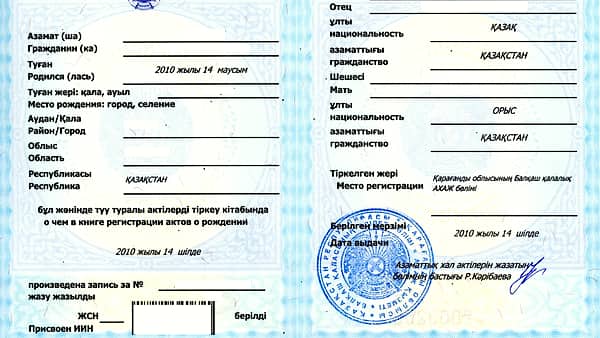
Birth Records and What They Establish
A birth record establishes that a registration was made and what it stated. Contemporaneous entries made by an informant with direct knowledge are close to conclusive. Late registrations, entries based on somebody else's later account, and systems that recorded limited information all support less, and the differences matter when parentage is questioned.
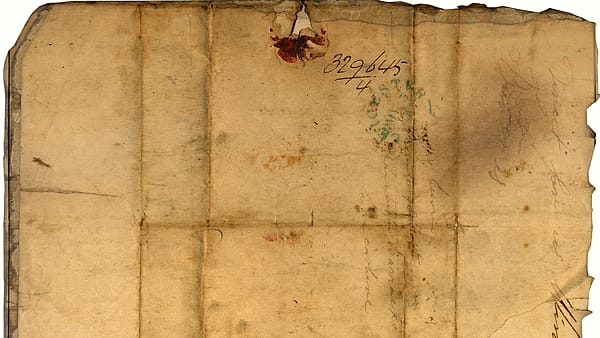
Photographs and Correspondence as Evidence
Photographs show that people were together on particular occasions and correspondence shows that they communicated. Neither establishes the nature of a relationship, and both exist in volumes that make selection visible. Their real value is showing continuity across a period, with dates and context, rather than proving any individual fact.

Joint Finances as Proof of a Relationship
Joint accounts, shared liabilities and mutual designations are among the most persuasive evidence of a relationship, because third parties verified the arrangements for their own reasons. Their weight comes from duration and from actual use rather than from existence. Couples who keep finances separate are common, and the reason for that should appear in the file.