Alterations, Initials and Interlineations
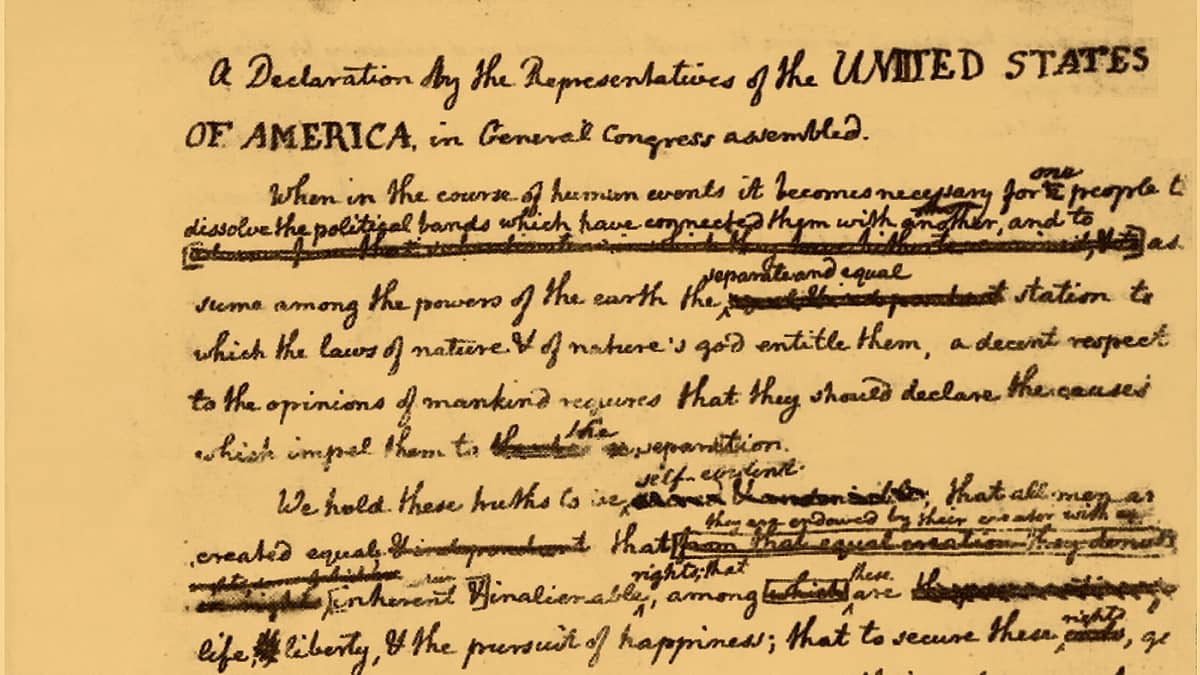
Every crossing-out, insertion and set of initials in a margin is a small event in the history of a document. Read together they usually tell a coherent story, and the trouble arises when one of them cannot be attributed to anybody at all.
The rule in short
An alteration on the face of an instrument raises three questions: what the document said before, who changed it, and whether the change was agreed. Initials in the margin answer the third for the people who wrote them. An unexplained alteration in a material term shifts attention onto whoever produced the document, and in some instruments it can defeat the instrument entirely.
A document that has been amended by hand is more informative than a clean one, not less. The amendments record something that happened between drafting and signing, and reading them in order usually reconstructs the negotiation. The difficulty is confined to alterations that nobody is willing or able to explain.
The three questions an alteration raises
What did it say before. Sometimes visible under the strike, sometimes recoverable from a draft, and sometimes only from the counterpart held by the other side.
Who made the change. The handwriting, the ink and the initials point somewhere, and where they point nowhere the alteration is in serious trouble.
Was it agreed. Initials by every signer answer this; initials by one signer answer it for that signer only, which is a distinction people routinely miss.
When it was made. Before execution, at execution or afterward, and the third is a different matter entirely from the first two.
Whether it was material. An alteration to a party's name or an amount is material; correcting a typographical slip in a recital generally is not.
What initials actually record
Agreement by whoever wrote them. Nothing more than that. A change initialled by one party and not by the other is a change that one party agreed to, and the document is silent about what anybody else thought of it.
Presence at the moment of change. Which is the genuinely useful part of the practice: initials place a named person with the document at the point the alteration was made, and that is hard to establish any other way.
Not the date of the change. Initials are almost never dated, so they fix the actor and not the moment, which is why an undated entry reappears as a problem here.
Not approval of the whole document. A signer who initials one amended clause has not thereby re-approved everything else in the instrument, although that is very often how the exercise is presented afterward.
Nothing at all, if unattributable. A pair of initials that no party recognizes and no witness can place is a mark on a page and nothing more, and it makes the alteration beside it worse rather than better.
| Alteration | Usual effect | What resolves it |
|---|---|---|
| Initialled by all parties | Effective as part of the document | The initials themselves |
| Initialled by one party | Agreed by that party only | Evidence of the other's assent |
| Unexplained, material | Serious doubt over the term or the instrument | Drafts, counterparts, the drafter's file |
| Unexplained, trivial | Little or none | A plain explanation in evidence |
| Made after execution | Generally ineffective, sometimes fatal | Re-execution with the same formalities |
Reading the sequence of changes
Ink over fold, or fold over ink. A line written across a crease and a crease made across a line look different, and the difference establishes what happened first.
Impressions from the sheet above. Writing presses through, and an impression on a following page shows that the entry was made while the pages were together.
Different pens, different sittings. A document carrying three distinct inks was worked on at least three times, whatever anybody now says about everything having been settled in a single meeting.
Alignment of typed insertions. A line typed on a different machine, or with different spacing, was added separately, which is easier to see than most people expect.
Overwriting and erasure. Both leave traces, and both are examinable, which is discussed in document examination.
The commonest instinct on finding an amended document is to produce a clean version. That replaces a document whose history is visible with one whose history has been erased, and the erasure is the fact everybody will end up arguing about.
When an alteration defeats an instrument
Material alteration by a party. A change to a material term, made after execution by a party who benefits and without the other's agreement, can void the instrument as against the innocent party.
Alteration by a stranger. Treated far more gently in most systems, on the sensible view that a party should not lose the benefit of a document merely because a person unconnected with it scribbled on the page.
Wills are particularly exposed. An alteration to a will made after execution generally has no effect at all unless the alteration was itself executed with the same formalities as the will, which almost nobody does at a kitchen table.
Negotiable instruments have their own rule. A material alteration discharges parties who did not assent, subject to protections for holders who took the instrument in good faith.
Most documents are not voided at all. For an ordinary commercial contract the usual consequence of an unexplained change is an evidential fight about that single term, rather than the destruction of the agreement as a whole.
Handling one in practice
Photograph it before anything else. In color, at a raking angle, and at high resolution, because the physical features do not survive an ordinary scan.
Get the counterpart. The other executed copy usually settles whether the alteration was made before the two copies separated, and a change present on one copy and absent from the other is decisive.
Ask the drafter. Lawyers' and agents' files frequently contain the marked-up version from which the change was carried across, together with the correspondence in which somebody asked for it.
Do not clean it up. Retyping an amended document to produce a tidy version destroys the evidence and creates a second document that says something different.
Explain it in the statement. An alteration described plainly and accounted for is a detail; the same alteration discovered by the other side is a problem, as with any document that contradicts the record.
Amendments on the face of a document are, on the whole, a good sign. They show that somebody read the thing, objected to part of it, and had the objection accepted. A document with no marks on it may simply be a document nobody read.
The exception is the unattributable change. An insertion in an unfamiliar hand, initialled by nobody, in a term that matters, is the single most damaging feature a document can carry, because it puts the person producing the document in the position of explaining something they cannot explain.
Because so much of the analysis is physical, the original matters here more than almost anywhere else. Ink sequence, impressions, folds and erasures do not reproduce, and a case that depends on them depends on somebody having kept the paper.
Where an amendment is being made now, the discipline is trivial and worth insisting on: strike, insert, initial by every party, and date the initials. Ten seconds at the table removes an argument that can otherwise last years.
Points to carry away
- An alteration is a fact about the document that has to be explained, not ignored.
- Initials record agreement by whoever initialled, and by nobody else.
- A material alteration made after execution can void an instrument.
- The order of ink, folds and impressions often shows the sequence of changes.
- An alteration nobody can account for damages the whole document, not just the term.
Questions readers ask
Does an alteration have to be initialled to be effective?
Not as a matter of general law, but initials are the only convenient evidence that everybody agreed to it. Where an amendment is made before execution and the document is then signed as amended, the signature covers the whole document including the change, and initials add nothing legally. They matter enormously in practice because they show, on the face of the paper, that the change existed at the moment of signing rather than appearing at some point afterward.
What happens if only one party initials a change?
The change is agreed by that party. Whether it binds the other depends on evidence outside the initials: correspondence discussing the amendment, a counterpart carrying the same change, or conduct consistent with the amended term. In practice a one-sided initial is a warning that the copies may have diverged, and the first step is almost always to obtain the other executed counterpart and compare the two documents line by line.
Can a struck-out clause still be read?
Frequently, and it is worth trying. A single line through typescript leaves the text perfectly legible, and even heavier obliteration often yields to raking light, infrared imaging or examination of the impression on the sheet beneath. Whether the recovered text matters is a separate question: a clause struck before execution was never part of the agreement, and recovering it establishes what was proposed rather than what was agreed.
Sources
- Federal Rules of Evidence — Rule 901, Authenticating or Identifying Evidencelaw.cornell.edu
- Federal Rules of Evidence — Rule 1002, Requirement of the Originallaw.cornell.edu
- Legal Information Institute — Parol Evidence Rulelaw.cornell.edu
- Legal Information Institute — Forgerylaw.cornell.edu
- Legal Information Institute — Estate Planninglaw.cornell.edu
- Legal Information Institute — Fraudlaw.cornell.edu
True Justice Record is a publication, not a law firm. This article states general rules and cites its sources; it is not advice about any particular case, and the law differs by state and changes over time.
More in Documents and What They Prove
The Notary's Role, and Its Limits
A notary verifies the identity of a person appearing before them and records the act performed: an acknowledgment that a signature is the signer's own, or an oath supporting a sworn statement. The notary does not read the document for content, does not advise on it, and does not certify that it is valid. Almost every complaint against a notary arises from that gap.

The Document That Contradicts the Record
A conflict between documents is resolved by asking which record was made closest to the event, by somebody in a position to know, for a purpose that made accuracy matter. A later document copying an earlier error is not corroboration. Where the conflict cannot be resolved on those grounds, the honest course is to present both and say which is relied on and why.

Reading a Form Against Its Instructions
The instructions to a form define its terms, list the evidence each answer requires, and state what happens when a question does not apply. A form completed from the printed question alone frequently produces answers that are true in ordinary language and wrong in the agency's usage. Reading the instructions first, and keeping the version used, prevents most of the difficulty.