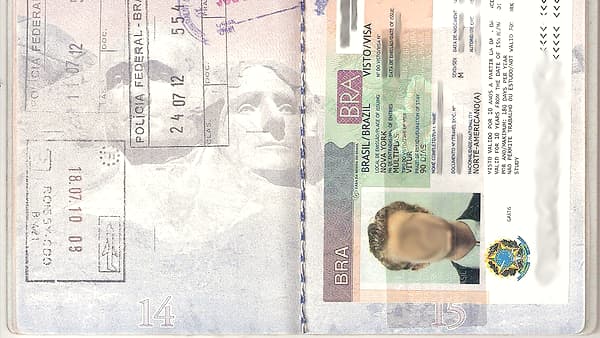
A record issued abroad does not arrive with the authority its holder assumes. It has to be authenticated in a way the receiving system recognizes, translated by somebody who can certify the translation, and reconciled with a name, a date and a registry practice that may all work differently at home. This subject sets out the apostille and the legalization route it replaces, what a certified translation must contain, and the secondary evidence available when a country will not or cannot produce the original record.
A certified translation carries a signed statement identifying the translator, asserting their competence in both languages, and confirming that the translation is complete and accurate. Most receiving bodies require nothing more, and no accreditation exists in many jurisdictions. What certification never does is say anything about whether the original document is genuine.
When a state disappears, its records are generally inherited by a successor authority, transferred to an archive, or distributed among the states that replaced it. Identifying the current custodian is the whole exercise, and it usually has a documented answer. Where no successor holds them, the position becomes one of substitute evidence supported by a documented enquiry.
An apostille is a standardized certificate issued by a designated authority in the country where a document originated, certifying the signature and seal on it. It is recognized without further steps by every other participating country. Where either country is outside the arrangement, the longer consular legalization route applies instead, and the two cannot be mixed.
A foreign judgment may be offered for recognition of the status it created, for enforcement of the obligation it imposed, or simply as evidence that a court reached a stated conclusion. Recognition and enforcement engage doctrines about jurisdiction, notice and public policy; evidential use engages only authentication and the ordinary rules about what a record proves.
Differences in the spelling of a name across foreign documents usually arise from transliteration between scripts, from naming systems that order or combine elements differently, or from a change recorded in one register and not another. Each is explained rather than corrected, and an explanatory statement filed at the outset prevents almost all of the resulting queries.
A police certificate reports what a particular country's criminal records system holds about a named person. Coverage is territorial and time-bound, the definition of a recordable matter varies, and expungement and juvenile rules mean that certificates from two countries about the same person can differ entirely. Certificates from every country of significant residence are usually required.
Legalization is a sequence: the issuing authority, then a regional or national certifying office, then the foreign ministry, then the consulate of the destination country. Each step certifies the signature and seal of the previous one. The chain cannot be entered in the middle, steps cannot run in parallel, and the whole exercise takes months rather than weeks.
Where a record cannot be obtained, receiving bodies accept substitute evidence, but only where the unavailability has been established rather than asserted. That means a documented approach to the correct office, a written response or evidence of the absence of one, and where available a published statement that records of that kind and period do not exist.
Secondary evidence of a birth is assembled from documents created for unrelated purposes that record the same particulars: religious entries, medical records, school enrolments, household registers and employment files. The case is strengthened by independence between sources and by proximity to the event, and weakened where every document descends from one late statement.
Registries differ in the level of government that holds records, in whether a central index exists, in how late registration is permitted, in what particulars are captured, and in whether religious or customary records serve the same function. Understanding the system a document came from converts an apparent gap into an explained one.
Three separate issues affect dates on foreign documents: non-Gregorian calendars requiring conversion, the ambiguity between day-month and month-day ordering, and dates that were estimated rather than recorded. Conversion is arithmetic and should be evidenced; ordering is usually resolvable from the document itself; estimation has to be acknowledged rather than resolved.
A foreign document requires authentication in a form the receiving system recognizes, a certified translation where it is not in English, and reconciliation of names, dates and registry conventions with the expectations of the body receiving it. Each is a distinct exercise, each takes time, and starting them in the wrong order wastes weeks.