Civil Registries That Work Differently
Every country records births, marriages and deaths, and almost no two do it the same way. What is recorded, when it is recorded, who reports it and where the record is kept all vary, and each variation produces documents that look defective to a reader expecting something else.
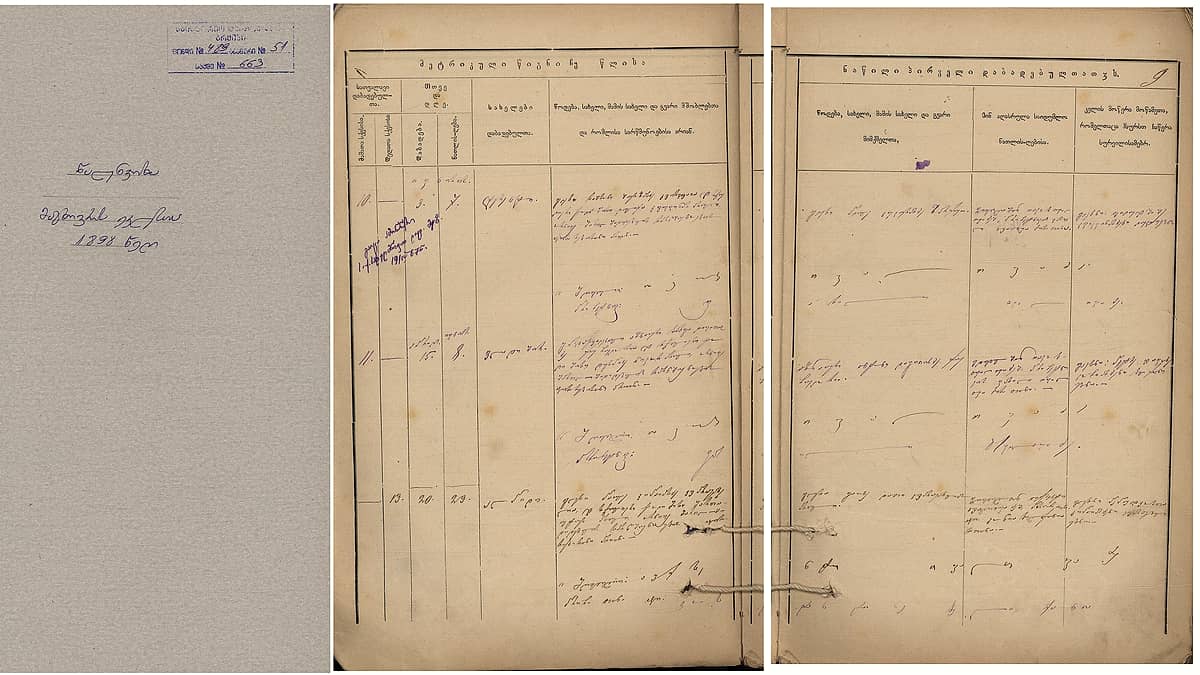
The rule in short
Registries differ in the level of government that holds records, in whether a central index exists, in how late registration is permitted, in what particulars are captured, and in whether religious or customary records serve the same function. Understanding the system a document came from converts an apparent gap into an explained one.
A document that omits a field, records an event years after it happened, or comes from a village office with no national counterpart is not a defective document. It is an ordinary product of a system built on different assumptions, and describing that system is usually all that is required.
Where records are actually held
At municipal level in many systems. The register sits in the town where the event occurred, and no national office holds a copy, so there is nothing to search centrally.
Which means no index. A person who does not already know where an event was registered may have no way of finding the record at all, because the search requires naming the office rather than the country, as answering a nil return sets out.
Provincial intermediates exist in some. A regional archive holds duplicates of the local registers, which is the practical route whenever the local office has closed, burned, or had its holdings transferred elsewhere.
Central registers are a modern layer. Where one exists it frequently begins from a particular year, so events before that point are found only in the local register and a central search returns nothing.
Transfers follow reorganization. Municipalities merge and boundaries move, and records travel with the successor authority rather than remaining at the address printed on an old certificate.
When events are registered
Late registration is normal. Many systems permit registration years after the event, on evidence, and the resulting certificate is a valid record of an event nobody recorded at the time.
It is usually marked. A properly issued late registration says so on its face, and reading that annotation explains a great deal about the reliability of the particulars.
The informant matters more. Where registration was late, the particulars came from somebody's recollection, and who that person was is the key to how much weight the entry carries.
Some events are never registered. Home births in rural areas, marriages conducted religiously without civil filing, and deaths during conflict frequently have no civil record at all.
Which is not evidence of anything. The absence of a record in such a system establishes nothing about whether the event occurred, and treating it as a discrepancy misreads the position.
| Feature | Common assumption | Frequent reality |
|---|---|---|
| A national index exists | Yes | Records held only locally |
| Registration was contemporaneous | Yes | Late registration is routine |
| The certificate lists both parents | Yes | The form may not have asked |
| A civil record always exists | Yes | Religious records may be the only ones |
| Registers survive | Yes | Conflict and fire destroy districts |
What is recorded, and what is not
Particulars vary widely. A certificate may omit the mother's name, the exact time, the informant's relationship or the place in any detail, because the form never asked.
Extracts differ from full entries. Many registries issue an abbreviated certificate by default, and the full extract containing the additional fields has to be requested specifically and by name.
Annotations carry later events. Marriage, divorce, adoption and death are frequently noted in the margin of the birth entry, which makes the annotated extract far more informative.
Formats changed over time. A certificate issued fifty years ago and one issued now from the same register look entirely different from each other, and the older form is not deficient for lacking fields nobody had yet invented.
Some systems record religion or ethnicity. Fields that would not appear on a domestic certificate, which occasionally raise questions the applicant did not anticipate.
The most effective response to a query about a foreign certificate is rarely a better certificate. It is a short account of how that country's registration worked at that time, which turns an apparent defect into an ordinary feature.
Alternative record systems
Religious registers. Baptismal, marriage and burial records maintained by religious institutions, which in some countries were the civil record for long periods.
Customary and community records. Village registers, family books and community rolls, which are recognized by some receiving bodies where nothing else exists.
Household registration systems. Some countries maintain a family or household register that records births, marriages and moves together, which is more informative than any single certificate.
School and military records. Frequently the earliest surviving document recording a person's age, and particularly useful where a birth was never registered at all, which is discussed in proving that a record once existed.
These support secondary evidence. Where no civil record exists, they are the material a substitute case is built from, as secondary evidence of a birth abroad sets out.
What destroys or displaces registers
Conflict. Registry offices are damaged and destroyed in war like any other building, and the loss is frequently complete for an entire district across a range of years.
Partition and secession. Records follow territory rather than people, so somebody born in one state may find their record now held by a country that did not exist at the time of their birth.
Fire and flood. The ordinary causes, with the ordinary consequence: a district's records for a range of years simply do not exist, and no amount of correspondence will produce them.
Deliberate destruction. Occasionally records are destroyed for political reasons, and where that is documented it supports an explanation, as documents from a state that no longer exists describes.
Reconstruction programs. Some countries have rebuilt destroyed registers from secondary sources, and a certificate issued from a reconstructed register normally says so on its face, which changes how the entry should be read.
The instinct to read a foreign certificate against a domestic template produces a long list of apparent defects, almost none of which are defects. The particulars a certificate carries were determined by a form somebody designed for a different society.
Locality is the feature that causes most practical difficulty. A system with no central index cannot be searched by anybody who does not already know where the event was registered, and that fact is frequently the whole obstacle.
Late registration deserves particular attention because it changes what the certificate is evidence of. An entry made twenty years after a birth records what an informant said, and identifying that informant is more useful than examining the certificate.
Where no civil record exists at all, the alternatives are real and are accepted by most receiving bodies. Religious registers, household books, school records and military files each recorded the same person for a different purpose.
Above all, the useful document in these cases is often not a certificate but an explanation. A short, accurate account of how the relevant system worked answers more queries than any amount of additional paperwork.
Points to carry away
- Records may be held locally with no central index at all.
- Late registration is normal in many systems and is recorded as such.
- Particulars captured differ, so fields may simply not exist.
- Religious and customary records sometimes serve as civil ones.
- Conflict, partition and reorganization move or destroy registers.
Questions readers ask
What can be done when a country has no central register?
The search has to be directed at the place where the event occurred, which means establishing that place first. Family knowledge, older documents, religious records and community sources are the usual routes to identifying the municipality, and once it is known the local office can be approached directly. Where the office has closed or merged, provincial archives frequently hold duplicates. What does not work is a request to a national authority, which has nothing to search and will say so.
Is a late-registered certificate less reliable?
It is evidence of something different rather than something weaker. A contemporaneous entry records what was known at the time; a late entry records what an informant stated years afterward, on whatever evidence the registry required. That makes the identity of the informant and the evidence they produced the important questions. A late registration supported by a religious record and a statement from somebody present at the birth is considerably stronger than one supported by nothing but an assertion.
Do religious records count as civil records?
In some countries and for some periods, yes, because the religious institution was the body maintaining the register and no separate civil system existed. Elsewhere they are secondary evidence rather than the record itself. Receiving bodies generally know which countries and periods fall into which category, and their published guidance frequently says so. Where a religious record is the only available document, producing it together with an explanation of the registration history is the ordinary approach.
Sources
- U.S. Department of State — Visa Reciprocity and Civil Documents by Countrytravel.state.gov
- USCIS Policy Manual — Volume 6, Part B, Chapter 2uscis.gov
- 8 CFR § 103.2 — Applications, Petitions, and Other Documentslaw.cornell.edu
- 8 CFR § 204.1 — General Information About Immediate Relative and Preference Petitionslaw.cornell.edu
- Federal Rules of Evidence — Rule 803, Exceptions to the Rule Against Hearsaylaw.cornell.edu
- National Archives — Order Copies of Recordsarchives.gov
True Justice Record is a publication, not a law firm. This article states general rules and cites its sources; it is not advice about any particular case, and the law differs by state and changes over time.
More in Documents From Another Country
Certified Translation and Who May Certify It
A certified translation carries a signed statement identifying the translator, asserting their competence in both languages, and confirming that the translation is complete and accurate. Most receiving bodies require nothing more, and no accreditation exists in many jurisdictions. What certification never does is say anything about whether the original document is genuine.
Documents From a State That No Longer Exists
When a state disappears, its records are generally inherited by a successor authority, transferred to an archive, or distributed among the states that replaced it. Identifying the current custodian is the whole exercise, and it usually has a documented answer. Where no successor holds them, the position becomes one of substitute evidence supported by a documented enquiry.
The Apostille and the Countries It Covers
An apostille is a standardized certificate issued by a designated authority in the country where a document originated, certifying the signature and seal on it. It is recognized without further steps by every other participating country. Where either country is outside the arrangement, the longer consular legalization route applies instead, and the two cannot be mixed.