Joint Finances as Proof of a Relationship
Financial entanglement is persuasive because somebody else checked it first. A bank opened the account, an insurer priced the policy, a lender accepted the liability, and not one of them did so in order to help anybody prove anything later.

The rule in short
Joint accounts, shared liabilities and mutual designations are among the most persuasive evidence of a relationship, because third parties verified the arrangements for their own reasons. Their weight comes from duration and from actual use rather than from existence. Couples who keep finances separate are common, and the reason for that should appear in the file.
Money leaves a trail that institutions maintain for their own purposes. That is what makes financial evidence different from photographs: a third party assessed the arrangement, took a risk on it, and kept a record.
The strongest financial evidence
A joint account with a history. An account held in both names for years, with ordinary transactions running through it, is among the most persuasive items available.
Shared liabilities. A mortgage, loan or lease in both names means a lender accepted both people as responsible, which is a verified assessment.
Joint tax filings. Where a system permits joint returns, filing one is a formal declaration of status made under penalty, per tax returns offered as evidence.
Insurance naming both. Policies where each is covered or named as a beneficiary reflect an insurer's acceptance of an insurable interest between them.
Property held together. Joint ownership of a home or vehicle involves registration by a third party and a durable record of it.
Employment benefit designations. Enrolling a partner in a workplace scheme requires the employer to record the relationship, frequently with supporting documents.
What gives this material weight
Somebody else verified it. Banks, insurers and lenders checked the arrangement before agreeing to it, which is a form of corroboration no self-generated document has.
Duration. An arrangement running for years establishes a pattern, while one opened recently establishes that it was opened recently.
Actual use. A joint account with regular transactions is evidence; one opened and never used is a document rather than a fact.
Both names on one instrument. A single account or policy naming both people is stronger than two separate arrangements at the same address.
Consequences attached. Designations that would have real effect, such as beneficiary nominations, carry more than ones that would not.
Ordinary purpose. Arrangements made for their own reasons rather than for a proceeding read differently, which is the general point in cohabitation and proving a life together.
| Evidence | Weight | Reason |
|---|---|---|
| Long-running joint account | High | Verified and durable |
| Joint mortgage or lease | High | A lender assessed both |
| Beneficiary designation | High | Real consequences |
| Recently opened joint account | Low | Establishes recency only |
| Authorized user on a card | Low | No shared liability |
What carries less than expected
A recently opened joint account. It shows that two people opened an account, and where it appears weeks before a filing that is exactly how it reads.
Transfers between separate accounts. Money moving between two people establishes a financial connection, and it is explained many ways besides a relationship.
Authorized user status. Being added to somebody's card is not a shared liability, and it is frequently presented as though it were.
Statements without context. Pages of transactions with nothing indicating what they show require a reader to do the analysis, and they may not.
Cash arrangements. Support paid in cash leaves nothing behind, which is the difficulty described in cash and why it is hard to prove.
Single large transfers. One substantial movement of money establishes that a transaction happened rather than that two people live an interdependent life.
Documents without the opening date. Recent statements from a long-standing account look identical to recent statements from a new one, and only the opening date separates them.
The fact a reader wants from a joint account is when it was opened and whether it has been used since. Balances and totals are largely irrelevant. Files routinely supply three months of recent statements and omit the one document that would establish the arrangement has existed for years.
When finances are deliberately separate
It is common and unremarkable. Many couples maintain separate accounts throughout a relationship for reasons that have nothing to do with its genuineness.
Say so in the file. An unexplained absence of joint arrangements invites an inference, and a sentence explaining the arrangement removes it.
Show interdependence another way. Regular contributions to shared costs, documented from separate accounts, establish the same thing through a different route.
Designations still work. Beneficiary nominations and emergency contacts operate independently of whether accounts are shared.
Cultural and practical reasons exist. Prior debts, credit histories and family expectations all produce separate finances, and stating the reason is straightforward.
One earner households. Where only one person has income, joint arrangements may be limited, and the file should reflect the actual situation rather than an invented one.
Presenting financial evidence
Provide complete statements. Extracted single pages invite a question about the rest, and complete periods answer it before it is asked.
Cover the whole period. Statements from the last three months establish three months, and a file needs a spread across the relationship.
Annotate what matters. A short note identifying the significant entries makes a statement usable rather than leaving a reader to search for the point.
Redact carefully and disclose the redaction. Removing unrelated account numbers is proper, and unexplained blanks look like something else, per redactions and what they conceal.
Include the account opening date. It is the fact a reader most wants and the one most often missing from what is filed.
Do not overwhelm the file. Selected statements spread across the period, with a short schedule explaining them, work far better than every statement the bank ever issued.
Match the documents to the narrative. Where a file describes shared costs, the statements should show them, and a mismatch between the account and the records is worse than either alone.
Financial evidence is persuasive because institutions verified it for their own reasons. A bank, a lender or an insurer assessed the arrangement and accepted a risk on it, which no self-produced document can match.
Duration and use are what give it weight. An account held for years with ordinary transactions running through it establishes a pattern; one opened shortly before a filing establishes that it was opened shortly before a filing.
The strongest items name both people on a single instrument and carry real consequences: joint liabilities, beneficiary designations, policies where each is covered. Separate arrangements at the same address are weaker.
Couples who keep their money apart are common, and the absence of joint arrangements is only a problem when it is left unexplained. A sentence saying why, plus evidence of shared costs, addresses it entirely.
Financial documents are the material most likely to be discussed in detail when a couple is questioned, and gaps in them shape the questions asked. Where a filing is heading toward that stage, what happens at a green card interview explain what happens at a green card interview and what the file should already contain.
For presentation, complete statements spread across the period, with the account opening dates included and the significant entries annotated, are worth more than a large volume of recent material without context.
Points to carry away
- Third-party verification is what gives this material its weight.
- Duration and actual use matter more than existence.
- Designations made for other purposes are strong evidence.
- A recently opened joint account establishes recency only.
- Separate finances are normal and should be explained.
Questions readers ask
Why is a joint account such strong evidence?
Because a third party set it up and maintains the record. A bank verified the identity of both people, accepted them as joint holders and has kept a transaction history ever since, none of which was done to assist anybody in a proceeding. What makes a particular account persuasive is how long it has existed and whether it has actually been used. An account held for five years with ordinary household transactions running through it is compelling; one opened last month is a document rather than evidence of a shared life.
Does it look bad if a couple keeps their finances separate?
Only if nobody explains it. Separate finances are extremely common, for reasons ranging from prior debts and credit histories to simple preference, and none of them says anything about whether a relationship is genuine. The problem arises when a file simply contains no joint financial material and offers no account of why. A short explanation, together with evidence of regular contributions to shared costs from each person's own account, establishes the same interdependence through a different route.
What is the most common mistake in presenting financial documents?
Filing three months of recent statements and omitting the account opening date. The fact a reader most wants is how long the arrangement has existed, and recent statements do not show it. The second most common mistake is supplying extracted pages rather than complete periods, which invites a question about what was on the pages that were left out. Complete statements sampled across the whole relationship, with the significant entries annotated, is what a usable file looks like.
Sources
- USCIS Policy Manual — Evidenceuscis.gov
- 8 CFR 204.2 — Petitions for Relativesecfr.gov
- Federal Rules of Evidence — Rule 803(6), Records of a Regularly Conducted Activitylaw.cornell.edu
- Consumer Financial Protection Bureau — Joint Accountsconsumerfinance.gov
- IRS — Filing Statusirs.gov
- Federal Rules of Evidence — Rule 1006, Summaries to Prove Contentlaw.cornell.edu
True Justice Record is a publication, not a law firm. This article states general rules and cites its sources; it is not advice about any particular case, and the law differs by state and changes over time.
More in Proving a Relationship
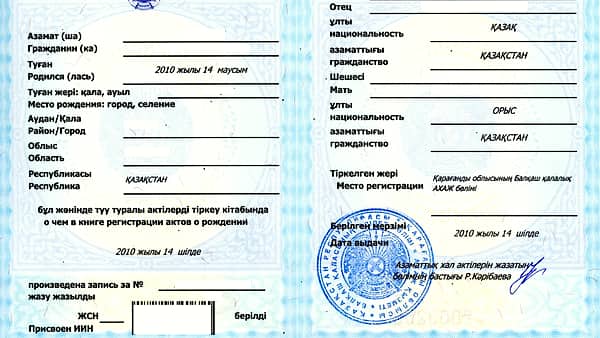
Birth Records and What They Establish
A birth record establishes that a registration was made and what it stated. Contemporaneous entries made by an informant with direct knowledge are close to conclusive. Late registrations, entries based on somebody else's later account, and systems that recorded limited information all support less, and the differences matter when parentage is questioned.
Photographs and Correspondence as Evidence
Photographs show that people were together on particular occasions and correspondence shows that they communicated. Neither establishes the nature of a relationship, and both exist in volumes that make selection visible. Their real value is showing continuity across a period, with dates and context, rather than proving any individual fact.

Affidavits From People Who Knew Them
A useful declaration identifies the writer, explains how they came to know the people involved, and describes specific things they observed with dates and places. Statements that assert conclusions, omit the basis of knowledge, or arrive in identical wording from several people are discounted heavily and can damage a file rather than support it.