Records Held by Somebody Who Is Not a Party
The evidence that would settle a case is very often held by an organization with no interest in it whatever. Getting hold of that material is a distinct skill, and the first step is always to work out which of several quite different regimes the holder is subject to.

The rule in short
Third-party records are reached by four routes: a request by the subject of the record, a statutory access right, a subpoena or equivalent compulsory process, and a request made through an agency's own disclosure procedure. Each has different requirements, different timescales and different limits, and choosing the wrong one wastes weeks before producing nothing.
The most useful document in a case is frequently one that neither party has ever seen. It sits in a hospital chart, a personnel file, a bank's archive or an agency's system, held by an organization that has no stake in the outcome and no particular wish to be involved. Reaching it is a procedural exercise, and the procedure depends entirely on who is holding it.
The four routes, and what distinguishes them
A request by the subject. Where the record is about a person, that person can usually ask for it directly, and the request is quick, cheap and requires no proceeding to be on foot.
A statutory access right. Freedom of information provisions, privacy statutes and sector-specific rules on medical and education records each create rights that operate independently of any dispute.
Compulsory process. A subpoena or equivalent order, available where proceedings exist, which reaches material the holder would not otherwise release and can be enforced.
An agency's own procedure. Many agencies maintain a route for producing their file to the person it concerns, which is faster than the general statutory route and covered in asking an agency for its file.
Consent short-circuits most of them. A signed authorization from the subject of the record turns most refusals into cooperation, and is worth obtaining before any of the formal routes is started.
Choosing the right route
Start with the cheapest that could work. A subject-access request costs a letter and produces an answer in weeks; compulsory process costs a filing and produces one in months.
Ask what the holder is used to. Large institutions have a department for this, and the department has a preferred form. Using it is faster than being right about an alternative.
Consider what will be withheld. Voluntary routes come with exemptions the holder applies itself, and redactions are far more common on that route than under compulsion.
Watch the clock on retention. A record scheduled for destruction will be destroyed on schedule regardless of anybody's intentions, which is covered in records destroyed on schedule.
Preserve first, request second. A letter asking the holder to preserve specified material can be sent the same day, costs nothing, and changes the consequences entirely if the material later turns out to have disappeared.
| Holder | Usual first route | What it typically costs |
|---|---|---|
| Hospital or clinic | Request by the patient, or with authorization | A copying fee |
| Employer | Request by the employee, where a right exists | Little or nothing |
| Bank | Request by the customer | A per-statement charge |
| Government agency | The agency's own disclosure procedure | Usually nothing |
| Any of them, in proceedings | Subpoena | The holder's search costs |
What the holder owes, and to whom
Nothing to the requester, usually. A non-party holder owes no general duty to assist anybody's case, which is why voluntary requests are answered either as a courtesy or under a statute, and not on any other basis at all.
A duty to the subject of the record. Confidentiality obligations run to the person the record is about, which is why consent from that person removes most obstacles.
Compliance with valid process. Once served with a subpoena, the holder's position changes entirely: production becomes an obligation, subject to any objection they choose to raise.
Notice to the subject, in some categories. Financial records in particular carry notice requirements, giving the customer an opportunity to object before the bank produces anything.
Costs, in most systems. Holders can generally recover the reasonable cost of searching and copying, and a request that is expensive to answer will be answered slowly.
A preservation letter is a paragraph, costs nothing and can be sent the day a dispute becomes foreseeable. It does not compel production, but it fixes the point at which the holder knew the material mattered, and that point decides a great deal later.
What cannot be reached
Privileged material. Legal advice held by a third party remains privileged in the hands of whoever holds the privilege, and the holder cannot waive somebody else's.
Material never created. A great many requests seek documents that would exist in a well-run organization and do not exist in this one, and no process compels their creation.
Records already destroyed. Where a retention schedule has run, the material is gone, and the remaining question is whether it can be reconstructed from what survives.
Material outside the jurisdiction. Foreign holders are reached, if at all, by treaty routes or by letters of request, which take considerably longer than anybody expects.
Anything shielded by statute. Certain categories are protected absolutely rather than by exemption, and no amount of process opens them.
Making the request well
Describe the record, not the subject. "All documents concerning the applicant" invites a refusal for breadth; a request naming a file, a period and a document type gets answered.
Give the holder what it needs to find it. Account numbers, reference numbers, dates of attendance and previous names, because a holder that cannot locate the record will say it does not exist.
Say what will happen to it. Holders are noticeably more forthcoming where the purpose is stated plainly, and a sentence of purpose costs nothing to include and removes the suspicion that something is being concealed.
Set a realistic deadline. One that reflects the holder's published response time rather than the requester's own timetable, because an unrealistic deadline is simply ignored.
Keep the correspondence. The request, the response and the intervening chasers are themselves evidence about what was sought and what was said to exist.
The single most useful habit in this area is to identify the holder precisely before doing anything else. Hospitals, employers, banks and agencies each answer to different rules, and a request drafted for the wrong regime is not merely slower but frequently unanswerable.
The second is to use consent wherever it is available. A signed authorization from the person the record concerns converts a legal problem into an administrative one, and administrative problems are solved in weeks.
The third is to write requests that a clerk can act on. The person who reads the request is looking for a file, and a request that describes the file gets one; a request that describes the dispute gets a letter asking for clarification.
Where the material genuinely cannot be reached, that is worth establishing early rather than late. A case built around a document that will never arrive is a case that has to be rebuilt, and the rebuilding is easier before everything else has been committed to.
Throughout, the timescale is the enemy. Retention schedules run, institutions reorganize and archives are transferred, and material that would have been produced without difficulty becomes irrecoverable while somebody decides which form to use. An employer's file is one of the commonest examples, and its contents are described in employment Files and What They Contain.
Points to carry away
- The holder's category decides the route, and the routes are not interchangeable.
- A subject-access request is often faster than compulsory process and always cheaper.
- Compulsory process reaches material that voluntary routes cannot.
- Notice requirements protect the subject of the record, not the holder.
- Retention schedules mean the record may already have gone.
Questions readers ask
Is a subpoena always necessary to get third-party records?
Far from it, and reaching for one first is usually a mistake. Where the record concerns a person who is willing to cooperate, that person can generally obtain it themselves under an access right, at a fraction of the cost and in a fraction of the time. Compulsory process earns its place where the holder will not produce voluntarily, where the subject of the record is not cooperating, or where the material sought is about somebody other than the requester.
Can a holder refuse to comply with a subpoena?
They can object, and the grounds are real: that the request is unduly burdensome, that it seeks privileged or protected material, that the records do not exist, or that compliance would breach an obligation owed to the subject. What they cannot generally do is ignore it. The usual sequence is an objection in writing, a negotiation about scope, and an application to the court if the negotiation fails, and most requests are narrowed rather than refused outright.
How long do organizations keep records?
It varies enormously and is almost always written down. Retention schedules are published by government agencies, required by regulators in banking and healthcare, and adopted internally by most large employers. Periods run from a couple of years for routine correspondence to permanent retention for a small category of core records. The practical point is that these schedules are followed, so a record that has passed its period is not merely hard to find but has actually been destroyed.
Sources
- Federal Rules of Civil Procedure — Rule 45, Subpoenalaw.cornell.edu
- Federal Rules of Civil Procedure — Rule 26, Duty to Discloselaw.cornell.edu
- Legal Information Institute — Subpoena Duces Tecumlaw.cornell.edu
- 5 U.S. Code § 552 — Freedom of Information Actlaw.cornell.edu
- 12 U.S. Code § 3402 — Access to Financial Recordslaw.cornell.edu
- National Archives — Records Management, Scheduling Recordsarchives.gov
True Justice Record is a publication, not a law firm. This article states general rules and cites its sources; it is not advice about any particular case, and the law differs by state and changes over time.
More in Records Somebody Else Holds
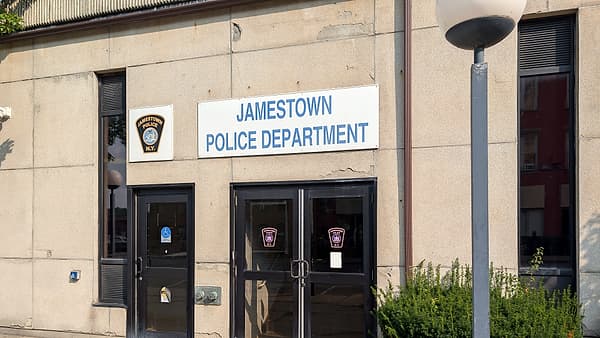
Police Reports and Incident Records
A police report records the officer's own observations, the accounts given by others, and the officer's conclusion. Only the first of those is direct evidence. The report is frequently inadmissible for the truth of what it contains, though it remains valuable for identifying witnesses, fixing times and establishing what was said at the scene.

Redactions and What They Conceal
A redaction removes protected content while leaving the rest of the document usable. It should be visible, it should cite the ground relied on, and the remainder should be produced. Silent removal, whole-document withholding where partial production was possible, and over-broad application of an exemption are all challengeable, usually through internal review.

Medical Records and Who May Release Them
Providers release records to the patient on request, to third parties on a compliant written authorization, and to anybody under valid compulsory process with the notice the rules require. An authorization has to identify the record, the recipient and the purpose, state an expiry, and carry the patient's signature. Most refusals are refusals of the paperwork rather than of the request.